


 Casa /
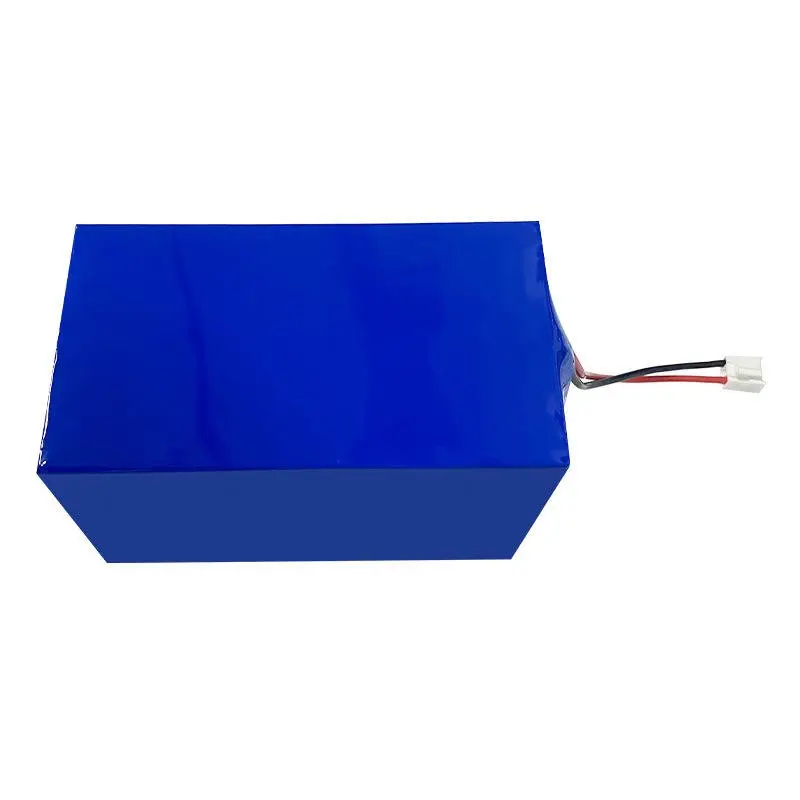
 Pacchi batterie personalizzate agli ioni di litio da 24V e 36V per tosaerba elettrici, raccoglitori di tè, tagliasiepi e utensili da giardino


Indice
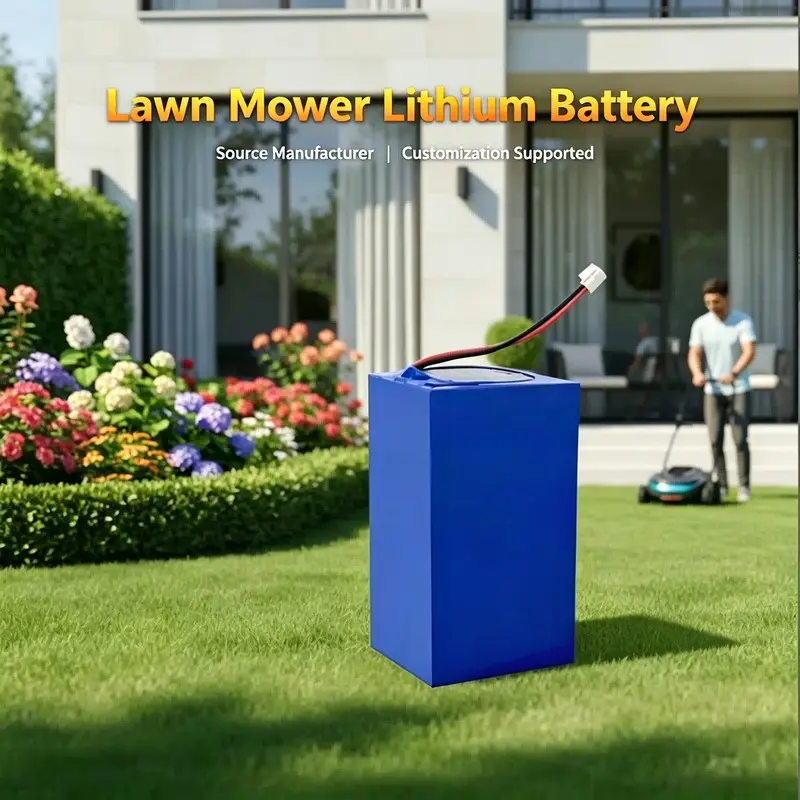
Cordless garden equipment has changed how homeowners, landscaping teams, and agricultural workers manage outdoor tasks. Electric lawn mowers, tea harvesters, hedge trimmers, grass trimmers, leaf blowers, and pruning tools are quieter and easier to maintain than fuel-powered equipment. However, their performance depends heavily on the quality of the battery pack.
A custom 24V or 36V lithium-ion battery pack can provide the power, runtime, weight balance, and safety required for a specific garden tool. Instead of adapting equipment around a standard battery, manufacturers can develop a battery solution that matches the motor, enclosure, operating environment, and expected working time.
Why Garden Tools Need Purpose-Built Batteries
Garden tools operate differently from ordinary consumer electronics. A hedge trimmer may require repeated bursts of current when cutting thick branches, while a lawn mower may run continuously under changing grass conditions. Tea harvesters and backpack tools must remain light enough for workers to carry for extended periods.
These applications place several demands on the battery:
- Stable output under changing loads
- Sufficient current for motor startup
- Long runtime without excessive weight
- Protection against vibration, moisture, and heat
- Reliable operation during repeated charging cycles
- A secure mechanical connection to the equipment
A general-purpose battery may deliver the correct voltage but still fail to meet the required discharge current, enclosure dimensions, connector type, or environmental protection level. This is why battery customization should begin with the complete equipment specification rather than voltage alone.
Choosing Between 24V and 36V Battery Packs
Both 24V and 36V lithium-ion battery systems are widely used in electric garden equipment, but they are usually selected for different power levels.
A 24V battery pack is often suitable for compact lawn tools, lightweight hedge trimmers, pruning equipment, small tea harvesters, and residential garden devices. It offers a practical balance between power, size, and cost.
A 36V system is more commonly used when the motor requires higher output or longer operation. Examples include larger lawn mowers, commercial hedge trimmers, leaf blowers, cultivators, and professional landscaping tools.
Voltage alone does not determine performance. Battery capacity, discharge current, cell chemistry, motor efficiency, blade condition, terrain, and temperature all influence actual runtime. A 36V battery with an unsuitable BMS may perform worse than a carefully engineered 24V pack designed around the equipment’s real load profile.
Stable Power for High-Load Motors
Electric garden tools can place significant stress on a battery. When a lawn mower enters dense or wet grass, the motor may suddenly demand more current. A tea harvester or hedge trimmer may experience similar load changes when the cutting mechanism meets thicker material.
A custom garden tool battery pack can be configured with cells that support the required continuous and peak discharge currents. The internal connection structure, nickel strips, busbars, wiring, connectors, and BMS must also be designed to carry that current safely.
If any component is undersized, the pack may experience excessive voltage drop, overheating, unexpected shutdown, or reduced service life. Battery development should therefore include motor startup testing, continuous-load testing, peak-current evaluation, and temperature monitoring under realistic operating conditions.
Protezione BMS Intelligente
The battery management system is essential for the safety and reliability of a lithium-ion battery pack. A properly selected BMS can provide protection against:
- Sovraccarico
- Sovrascarico
- Corrente di fondo
- Corto circuito
- Squilibrio cellulare
- Temperatura di carica eccessiva
- Temperatura di scarico eccessiva
For more advanced garden equipment, the BMS may also support battery level indication, data logging, cycle counting, fault records, or communication with the tool and charger.
The BMS settings should match the battery cells and equipment rather than relying on generic protection values. For example, a lawn mower may require a higher short-term current threshold than a lightweight pruning tool. Incorrect settings can cause unnecessary shutdowns or fail to protect the pack effectively.
Custom Mechanical Design
Garden tool manufacturers often need more than a basic battery assembly. The housing, mounting structure, handle, locking mechanism, connector position, and overall weight distribution can directly affect the user experience.
Battery configurations may include:
- Detachable slide-in battery packs
- Backpack battery systems
- Integrated equipment-mounted batteries
- Handle-mounted compact packs
- Custom hard-shell enclosures
- Moduli batteria sostituibili
Backpack batteries are especially useful for tea harvesters, hedge trimmers, brush cutters, and other tools used continuously. Moving the battery weight from the tool to the operator’s back can reduce hand and arm fatigue. The harness, cable routing, quick-release system, and enclosure ventilation must still be designed carefully for comfortable and safe use.
Outdoor Environment and Durability
Unlike indoor electronics, garden tools are exposed to dust, grass particles, vibration, accidental impacts, humidity, and changing temperatures. The battery housing and sealing structure should be developed according to the intended working environment.
For professional or agricultural equipment, manufacturers may need to consider water resistance, dust protection, corrosion-resistant hardware, shock-absorbing materials, reinforced connectors, and flame-retardant enclosures.
The battery should also be tested in the actual installation direction. A pack that performs well on a laboratory bench may behave differently when exposed to vibration from a mower deck or cutting mechanism.
Capacity and Runtime Customization
Increasing capacity can extend runtime, but it also increases battery size, weight, cost, and charging time. The best solution is not always the largest possible battery.
Battery engineers should calculate capacity based on the equipment’s average power consumption, peak load, required working time, available installation space, and acceptable weight. For professional users, a detachable battery system with two interchangeable packs may be more practical than one oversized battery.
Charging requirements should be considered at the same time. Standard charging may be sufficient for residential tools, while commercial landscaping teams may require faster charging or multi-battery charging stations to support continuous operation.
OEM and ODM Battery Development
A custom battery project may include much more than voltage and capacity selection. OEM and ODM services can cover:
- Cell and chemistry selection
- Series and parallel configuration
- BMS design
- Enclosure development
- Personalizzazione di connettori e cavi
- Charger matching
- Labels and branding
- Communication functions
- Prototype production
- Reliability and safety testing
Before development begins, the battery supplier should receive information about motor power, maximum current, expected runtime, equipment dimensions, charging method, connector definition, environmental conditions, and target market requirements.
Conclusione
A well-designed 24V or 36V lithium-ion battery pack can improve the runtime, cutting performance, safety, and usability of electric garden tools. The most reliable solution is developed around the actual motor load, operating environment, enclosure, charging system, and user requirements.
For lawn mowers, tea harvesters, hedge trimmers, and other cordless gardening equipment, custom battery development provides greater flexibility than standard off-the-shelf packs. It allows manufacturers to create equipment that is lighter, safer, easier to operate, and better suited to residential, commercial, or agricultural applications.
What garden tools can use custom 24V and 36V batteries?
These battery packs can power lawn mowers, hedge trimmers, tea harvesters, grass trimmers, leaf blowers, chainsaws, sprayers, pruning tools, and cultivators.
Can the battery capacity and dimensions be customized?
Yes. Capacity, dimensions, enclosure, connector, discharge current, mounting structure, and cable length can be developed according to the equipment.
Is a 36V battery always better than a 24V battery?
No. The correct voltage depends on motor power, equipment design, required runtime, weight, and cost. A properly engineered 24V system may be more suitable for compact tools.
Can a communication function be added to the battery?
Yes. Depending on project requirements, the BMS can support battery status monitoring, cycle records, fault information, and communication with the tool or charger.
What information is needed for battery development?
The supplier normally needs the required voltage, capacity, motor power, continuous and peak current, battery dimensions, connector details, charging requirements, operating environment, and target application.
Parla con il produttore
Risorse e approfondimenti
Pacco batterie per robot industriali: come progettare energia affidabile per l'automazione moderna
2026-07-29
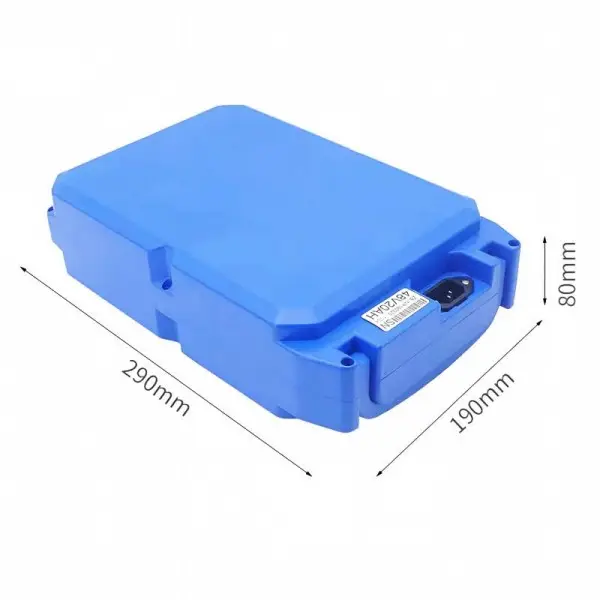
Pacco batteria al litio 24V 36V 48V 13Ah 20Ah per utensili elettrici da giardino, tosaerba e tagliaerba
2026-07-29
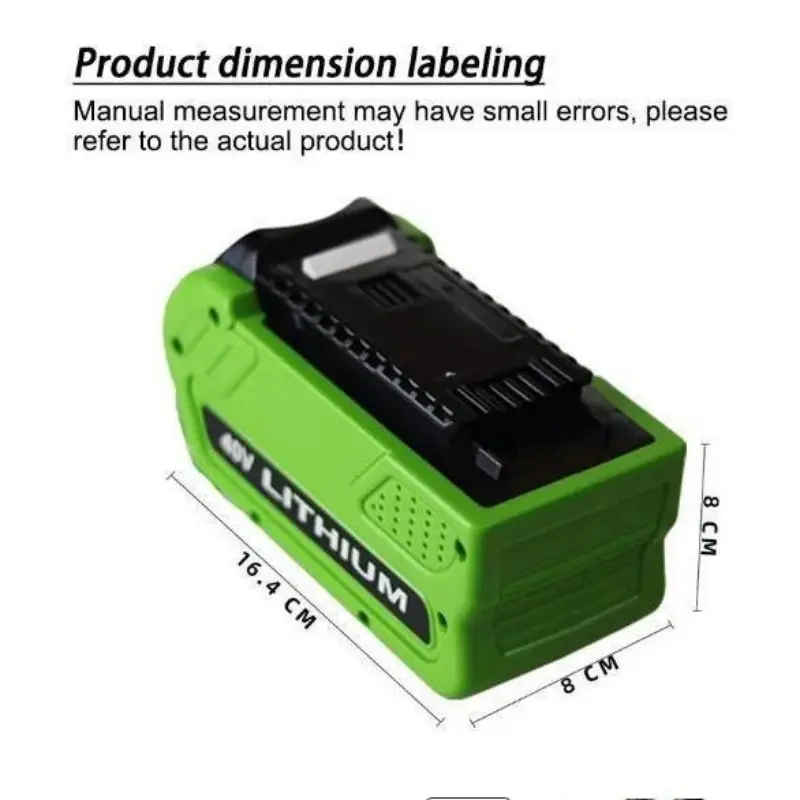
40V 6000mAh batteria sostitutiva per utensili al litio 18650 per tosaerba da esterno e elettrodomestici
2026-07-29
Pacchi batterie personalizzate agli ioni di litio da 24V e 36V per tosaerba elettrici, raccoglitori di tè, tagliasiepi e utensili da giardino
2026-07-29


