


 Casa /
 La migliore batteria LiPo per dispositivi IoT: come scegliere la soluzione di alimentazione giusta


Indice
- Why LiPo Batteries Are Used in IoT Products
- Start With the Device’s Real Power Profile
- Select Capacity Based on Runtime and Available Space
- Check Battery Dimensions Before Finalizing the Enclosure
- Protection Circuit and Temperature Monitoring Matter
- Choose the Correct Connector and Wiring
- Consider Charging Method and User Behavior
- When LiPo May Not Be the Best Choice
- Custom LiPo Battery Options for IoT Projects
-
Conclusione
- What voltage LiPo battery is commonly used in IoT devices?
- How do I calculate the required battery capacity for an IoT device?
- Why does an IoT device restart during wireless transmission?
- Does every IoT LiPo battery need a protection circuit?
- Can the size and connector of an IoT LiPo battery be customized?
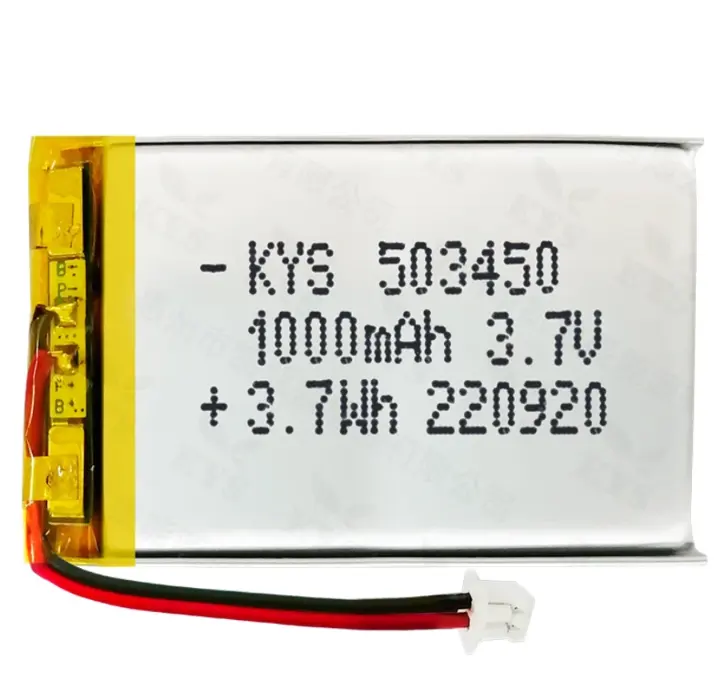
The best LiPo battery for IoT devices is not necessarily the battery with the highest capacity. A suitable battery must match the device’s operating voltage, standby consumption, communication peaks, available space, charging method, and expected service life.
IoT products range from compact asset trackers and wearable sensors to smart locks, wireless monitors, portable gateways, and industrial data-collection terminals. Although these devices may consume little power most of the time, many experience brief current spikes when a processor wakes up, a sensor starts, or a wireless module transmits data.
Choosing the battery around these real operating conditions helps prevent short runtime, unstable communication, unexpected resets, swelling, and premature battery replacement.
Why LiPo Batteries Are Used in IoT Products
Lithium polymer batteries, commonly called LiPo batteries, usually use a lightweight pouch structure. Their main advantage is design flexibility. They can be produced in thin, narrow, curved, or application-specific dimensions, making them suitable for compact electronics where cylindrical cells may not fit.
A standard single-cell LiPo battery typically has a nominal voltage of 3.7V, while some high-voltage versions have a nominal voltage of 3.8V or 3.85V. The battery’s charging voltage must match the cell specification and charging circuit. Using the wrong charger can reduce battery life or create a safety risk.
LiPo batteries also offer relatively high energy density and low weight. These characteristics are useful in portable and wearable IoT devices, where every gram and millimeter can affect the final product design.
Start With the Device’s Real Power Profile
Many IoT products spend most of their time in sleep mode. Their average consumption may appear very low, but average current alone does not tell the full story.
A cellular tracker, for example, may draw only a small current while waiting. When it connects to a network and uploads data, the current may rise sharply. Wi-Fi, Bluetooth, LoRa, LTE-M, NB-IoT, and GNSS modules all have different transmission and startup characteristics.
If the battery cannot support these peak loads, the voltage may drop and cause the device to restart or lose communication. This can happen even when the battery still shows remaining capacity.
Before selecting a battery, engineers should confirm:
- Sleep and standby current
- Average operating current
- Maximum pulse and continuous current
- Transmission frequency and duration
- Sensor warm-up requirements
- Processor and display consumption
- Required runtime between charges
Testing a working prototype provides more reliable information than estimating consumption only from component datasheets.
Select Capacity Based on Runtime and Available Space
Battery capacity is usually expressed in milliampere-hours. A larger capacity can extend runtime, but it also increases size, weight, cost, and charging time.
Small wearable sensors may use batteries below 500mAh, while portable monitoring devices and communication terminals may require several thousand milliampere-hours. There is no universal capacity that is best for every IoT product.
The design should also include reserve capacity. A battery rarely delivers its full labeled capacity under every condition. Low temperature, high current, aging, wireless transmission peaks, and charging limits can reduce usable energy.
Leaving a reasonable reserve helps the device continue operating as the battery ages and prevents frequent deep discharge, which can shorten service life.
Check Battery Dimensions Before Finalizing the Enclosure
For compact IoT devices, physical integration is often more difficult than selecting voltage or capacity.
LiPo battery dimensions are generally listed as thickness, width, and length. Engineers should also account for the protection circuit, tabs, wires, connector, adhesive, cushioning materials, and space for natural expansion during use.
The enclosure should not press tightly against the pouch cell. Sharp edges, screws, circuit boards, and moving parts must be kept away from the battery surface. The cable should have a controlled routing path so that it is not repeatedly bent or pulled during assembly and maintenance.
A custom LiPo battery can be developed when an off-the-shelf size cannot use the available space efficiently. However, the battery compartment should still be designed with appropriate mechanical protection and manufacturing tolerances.
Protection Circuit and Temperature Monitoring Matter
The best LiPo battery for IoT devices should include protection suitable for the product and charging system.
A protection circuit can help guard against overcharge, over-discharge, overcurrent, and short-circuit conditions. Some projects may also require an NTC thermistor so the device or charger can monitor battery temperature.
Protection settings should not be chosen independently of the application. A circuit with a current limit that is too low may shut down during wireless transmission. A limit that is too high may not provide the intended protection.
Battery suppliers should receive the device’s normal current, pulse current, charger specification, connector definition, and operating temperature range before confirming the protection solution.
Choose the Correct Connector and Wiring
A small connector can become a major source of field failure if its current rating, polarity, or locking strength is unsuitable.
The connector must match the device socket exactly, including pitch, housing type, terminal orientation, and positive and negative polarity. Wire gauge and cable length should support the expected current without causing unnecessary voltage loss.
For products exposed to movement or vibration, a locking connector may be more reliable than a friction-fit design. Wearable and frequently handled devices may also require additional strain relief at the battery wire outlet.
Polarity should always be confirmed with drawings or physical samples. Similar-looking connectors do not always use the same wire sequence.
Consider Charging Method and User Behavior
Most rechargeable IoT devices are charged through USB-C, Micro-USB, docking contacts, or a wireless charging system. The internal charging circuit must be designed for the selected battery chemistry, capacity, and maximum charging voltage.
A higher charging current can reduce charging time, but it may increase heat and place more stress on the battery. For unattended sensors or devices that remain connected to power for long periods, charging control and thermal monitoring become especially important.
Designers should also consider how the product will behave while charging. Some devices continue transmitting data, powering displays, or running sensors during charging. This additional load can affect charging time and heat generation.
When LiPo May Not Be the Best Choice
LiPo is highly suitable for rechargeable, compact IoT products, but it is not always the ideal solution.
A remote sensor expected to operate for many years without charging may be better suited to a primary lithium battery. Devices that require extremely long cycle life, higher thermal stability, or frequent high-current operation may benefit from another lithium chemistry or cell format.
Outdoor and industrial products may also require a rugged enclosure, low-temperature performance, waterproof construction, or replaceable battery architecture.
The correct choice should be based on the complete operating scenario rather than the popularity of one battery type.
Custom LiPo Battery Options for IoT Projects
A customized battery solution can include the required capacity, dimensions, wire length, connector, protection circuit, thermistor, label, packaging, and charging specifications.
For efficient development, the battery manufacturer should receive the device type, available battery space, target runtime, operating current, pulse current, charging voltage, charging current, environmental conditions, annual demand, and certification requirements.
Early cooperation between the device designer and battery engineer can reduce enclosure changes, improve runtime, and avoid compatibility problems during mass production.
Conclusione
The best LiPo battery for IoT devices is the one that fits the complete system. Capacity matters, but voltage compatibility, pulse-current capability, protection settings, dimensions, connector design, charging control, and environmental conditions are equally important.
By testing the real power profile and confirming the mechanical and electrical requirements early, IoT developers can create products with more predictable runtime, safer charging, and fewer field failures.
What voltage LiPo battery is commonly used in IoT devices?
Many compact IoT devices use a single-cell 3.7V LiPo battery. High-voltage 3.8V or 3.85V cells are also available, but the charger and device circuit must support the correct maximum charging voltage.
How do I calculate the required battery capacity for an IoT device?
Measure the device’s current during sleep, sensing, processing, and wireless transmission, then calculate consumption across a complete operating cycle. Add reserve capacity for temperature changes, aging, transmission retries, and real-world usage.
Why does an IoT device restart during wireless transmission?
The communication module may draw a current pulse that the battery, wiring, or protection circuit cannot support. This can cause a temporary voltage drop and reset the processor even when the battery is not empty.
Does every IoT LiPo battery need a protection circuit?
Most rechargeable IoT products should use appropriate battery protection. The specific protection functions and thresholds should match the cell, charger, current demand, and device safety design.
Can the size and connector of an IoT LiPo battery be customized?
Yes. LiPo battery dimensions, capacity, connector, polarity, cable length, protection circuit, thermistor, and labeling can be customized to fit the device and production requirements.
Parla con il produttore
Risorse e approfondimenti
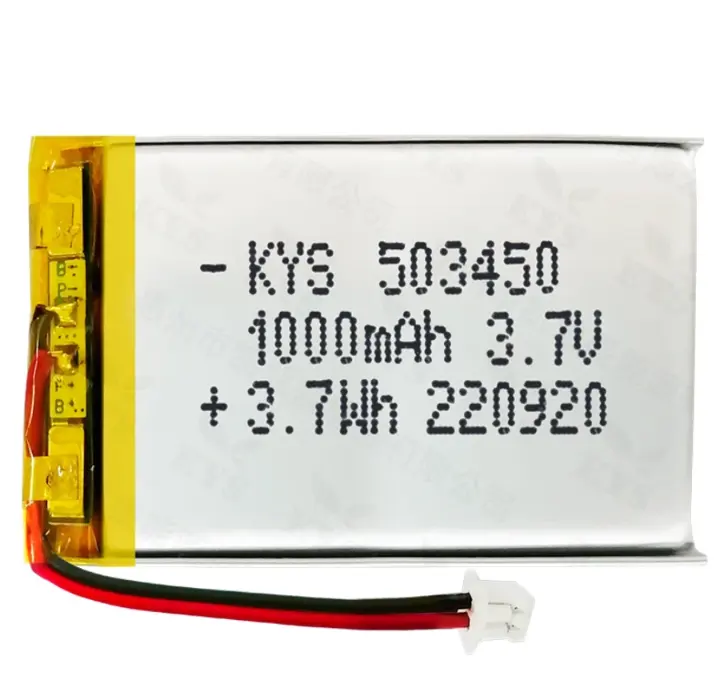
La migliore batteria LiPo per dispositivi IoT: come scegliere la soluzione di alimentazione giusta
2026-07-28
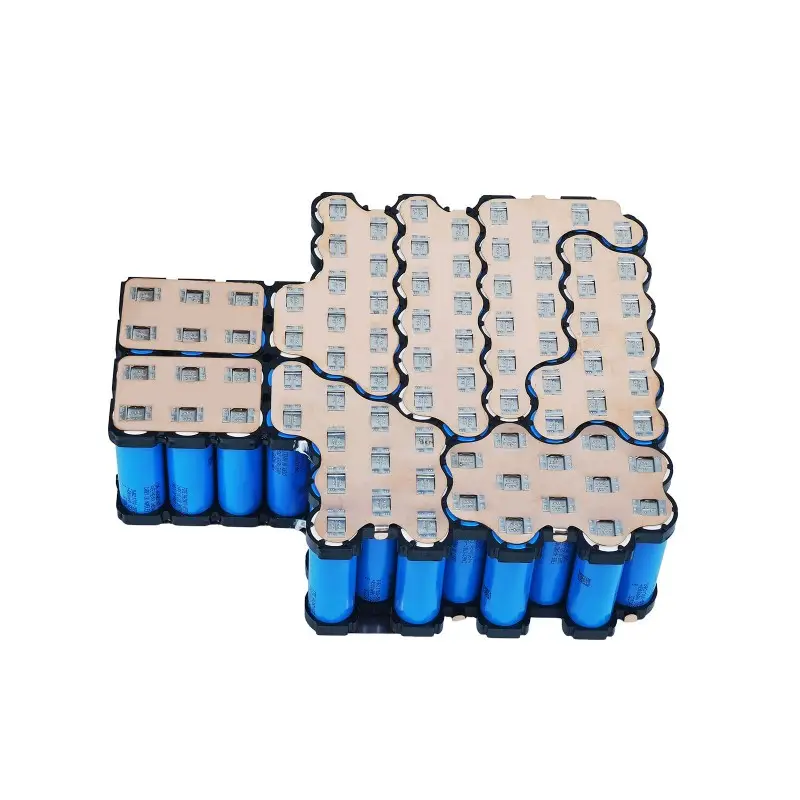
Pacco batterie al litio personalizzato 51.8V 30Ah 21700 per sistemi di alimentazione robotici umanoidi commerciali con BMS integrato per un funzionamento sicuro e affidabile
2026-07-28
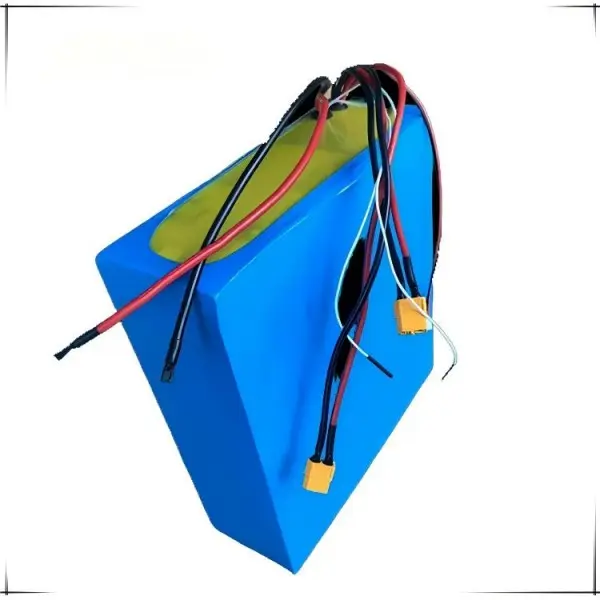
Modulo batteria LiFePO4 personalizzato da 38,4V 30Ah per robot con porta di ricarica wireless
2026-07-28
24V 36V 48V 52V 60V 72V 40Ah 50Ah LiFePO4 Batteria ricaricabile per camper, AGV, golf cart e sistemi di accumulo energetico
2026-07-28


