


 Casa /
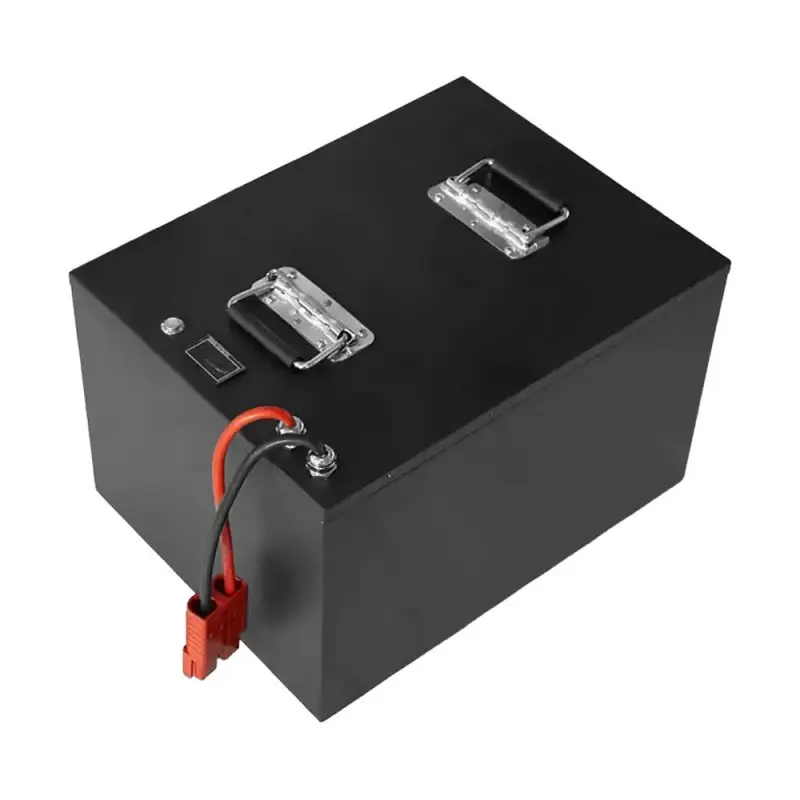
 Pacco batterie al litio personalizzato 25.2V 25Ah 21700 per robot industriali e AGV


Indice
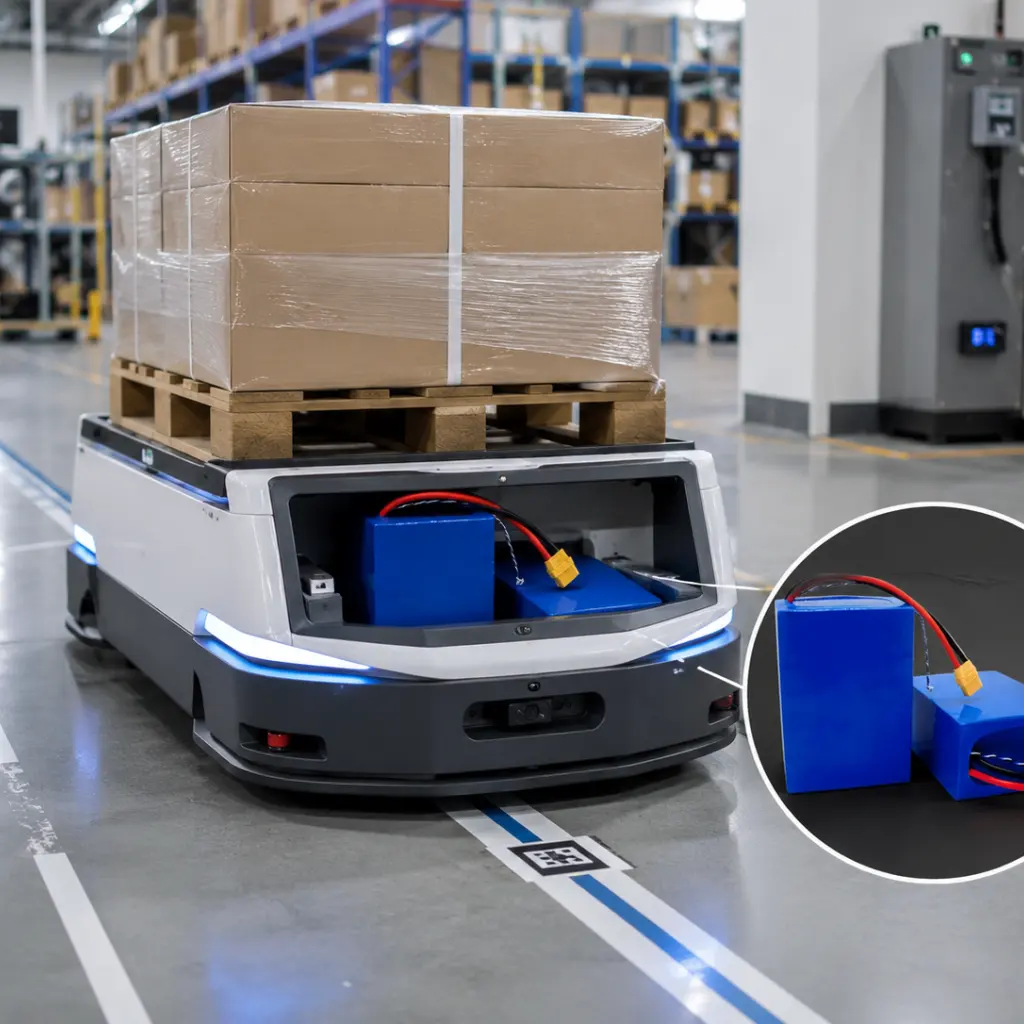
A 25.2V 25Ah 21700 lithium battery pack is a practical power source for industrial robots, automated guided vehicles, autonomous mobile robots, and other mobile equipment that works through repeated daily cycles. These applications need more than a high capacity rating. They also require stable voltage, sufficient current, reliable protection, secure installation, and a design that fits the machine without making maintenance difficult.
Built with 21700 lithium-ion cells, this battery pack can provide useful energy density in a compact industrial format. It can also be customized around the electrical load, battery compartment, charging method, connector system, and communication requirements of the equipment.
Why 25.2V Is Used in Mobile Equipment
A nominal voltage of 25.2V is commonly achieved by connecting seven lithium-ion cell groups in series. The battery reaches a higher voltage when fully charged, so the controller, motor driver, charger, wiring, and protection system must be selected for the complete operating voltage range.
This voltage class is suitable for many compact and medium-duty systems. It can support drive motors, sensors, control boards, communication modules, lifting mechanisms, cameras, and safety devices, depending on the total current demand.
Before selecting the battery, engineers should confirm continuous current, peak motor current, target working time, charging window, and standby consumption. Two AGVs with similar motors may still need different battery designs because their loads, routes, acceleration patterns, and schedules are not the same.
What 25Ah Means in Real Operation
The 25Ah capacity provides an energy reserve for equipment that must operate for extended periods between charging sessions. However, actual runtime cannot be judged from ampere-hours alone.
A robot moving light goods on a smooth warehouse floor will consume energy differently from an AGV carrying heavy materials, starting frequently, or operating a lifting platform. Temperature, speed, floor resistance, load weight, and control settings also affect energy use.
Battery selection should therefore begin with the real duty cycle. Manufacturers should provide average current, maximum current, expected working hours, idle time, and charging frequency. These details help determine whether 25Ah is appropriate or whether the project needs a different capacity or discharge rating.
Advantages of 21700 Lithium-Ion Cells
The 21700 cylindrical cell is larger than the traditional 18650 format and can store more energy per cell, depending on the selected model. This may allow the pack to reach the required capacity with fewer cells and fewer interconnections.
Cell quality and consistency remain critical. Cells should be sorted and matched for voltage, capacity, and internal resistance before assembly. Poorly matched cells may cause uneven charging, early protection activation, reduced usable capacity, or faster performance decline.
High-quality 21700 cells also support flexible pack construction. They can be arranged for rectangular compartments, removable battery boxes, drawer-style modules, or custom housings designed around the robot chassis.
Protezione BMS integrata
A battery management system monitors and protects the battery during charging, discharging, and storage. For robot and AGV applications, the BMS may provide protection against overcharge, over-discharge, overcurrent, short circuit, and abnormal temperature.
Its current rating must match the equipment rather than simply the battery capacity. Motors can draw short bursts of high current during startup, acceleration, turning, lifting, or overcoming floor joints. If the peak-current setting is too low, the battery may disconnect during normal operation.
Some systems require only basic protection, while advanced AGVs may need voltage, current, temperature, state-of-charge, or fault information. Communication functions can be customized when the robot controller needs to exchange data with the battery.
Mechanical Design Matters
A battery pack in a moving robot may be exposed to vibration, repeated acceleration, minor impact, dust, and heat from nearby components. It therefore needs secure cell fixing, reliable insulation, protected wiring, strong welded connections, and a housing suitable for the installation method.
Connector position, cable direction, mounting points, handles, charging ports, and service access should be confirmed before production. A removable battery may require a rugged enclosure and an easy-grip handle. A permanently installed pack may prioritize compact dimensions and protected cable routing.
For dusty or humid workplaces, the enclosure and connector arrangement may also need additional sealing.
Charging and Fleet Operation
The charger must match the battery chemistry, series configuration, maximum charging voltage, and allowed charging current.
In a single-robot application, charging may take place after each shift. In a larger fleet, the strategy may involve scheduled charging, opportunity charging, automatic docking, or replaceable battery modules. Each method places different demands on the pack.
Frequent short charging sessions may influence the charging-current design. A removable-pack system may need stronger connectors and a housing made for repeated handling. These details should be discussed early because they affect the battery, charger, docking station, and robot layout.
Custom Options for Industrial Projects
A standard battery may not fit every machine. OEM and ODM customization can include pack dimensions, enclosure material, connector model, cable length, discharge current, charging current, communication interface, mounting structure, labels, branding, and packaging.
For an accurate custom design, buyers should provide:
- Nominal and maximum voltage
- Average and peak current
- Target runtime
- Dimensioni del vano batteria
- Metodo di ricarica
- Requisiti per connettori e cavi
- Protocollo di comunicazione
- Ambiente operativo
- Installation and replacement method
Providing this information early reduces late changes and helps the supplier design a pack that can be installed, charged, and serviced correctly.
A Practical Power Solution for Automated Equipment
A 25.2V 25Ah 21700 lithium battery pack can support many industrial robots and AGVs when matched to the machine’s actual requirements. Its performance depends on the complete system: cell selection, BMS settings, wiring, connectors, enclosure, charger compatibility, and production testing.
The best battery is not simply the one with the largest capacity. It is the one that delivers the required runtime, handles peak loads, fits the available space, communicates with the controller when necessary, and remains practical to charge and maintain during daily operation.
Parla con il produttore
Risorse e approfondimenti
La migliore batteria LiPo per dispositivi IoT: come scegliere la soluzione di alimentazione giusta
2026-07-28
Pacco batterie al litio personalizzato 51.8V 30Ah 21700 per sistemi di alimentazione robotici umanoidi commerciali con BMS integrato per un funzionamento sicuro e affidabile
2026-07-28
Modulo batteria LiFePO4 personalizzato da 38,4V 30Ah per robot con porta di ricarica wireless
2026-07-28
24V 36V 48V 52V 60V 72V 40Ah 50Ah LiFePO4 Batteria ricaricabile per camper, AGV, golf cart e sistemi di accumulo energetico
2026-07-28


