

 Casa /
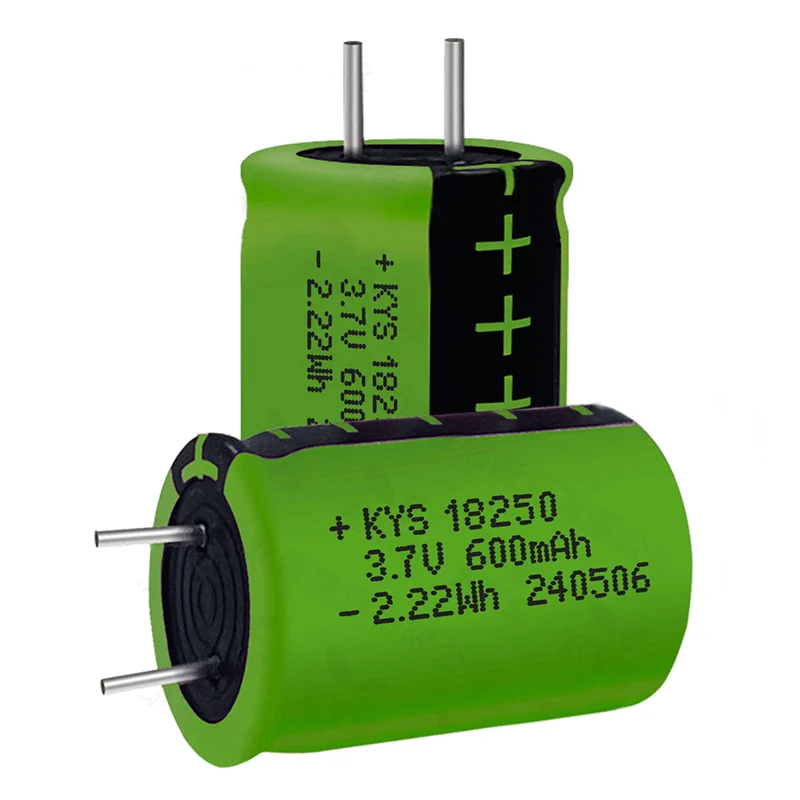
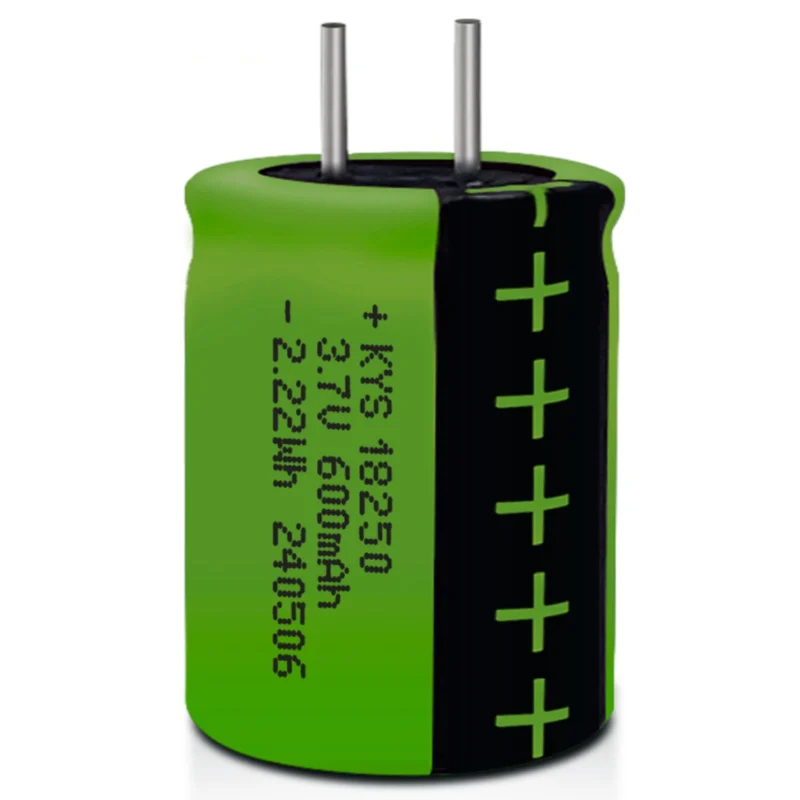
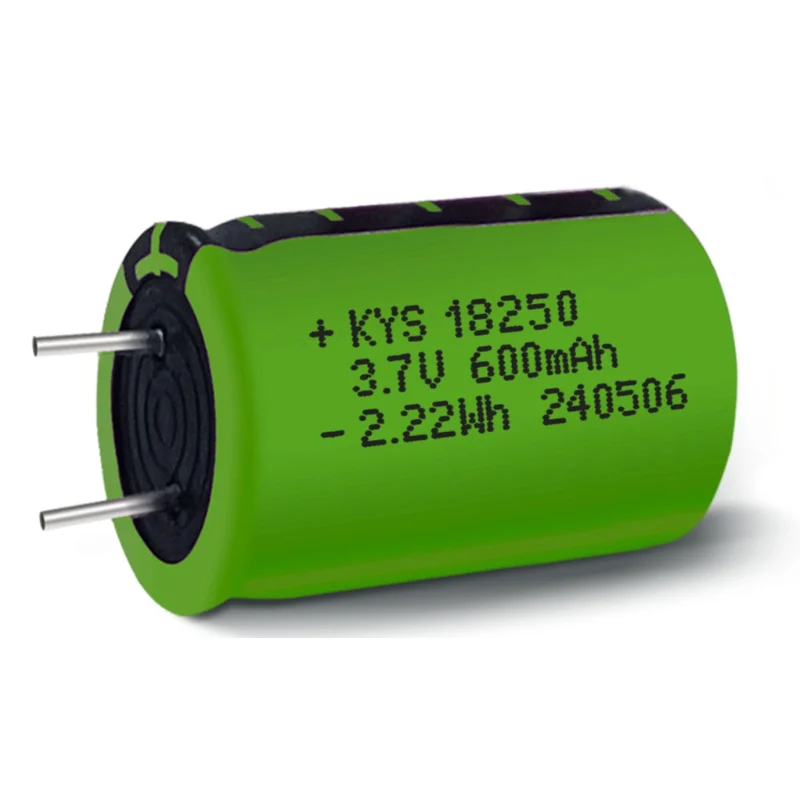
 18250 Celle a supercondensatore grandi da 3,7V
The 18250 3.7V lithium capacitor battery boasts stable voltage output, ultra-low self-discharge and reliable multi-protection safety system. It supports customizable specifications, high 20C discharge rate and long service life, widely matching various portable smart electronic devices.
- Model: 18250 Lithium-Ion Capacitor
- Cell Size: 18(Diameter)×25 mm
- Tensione nominale: 3,7 V
- Corrente di scarica: 3 A
- Capacità: 600 mAh
- Resistenza interna: 60 mΩ
- Ambito di applicazione: Prodotti elettronici
- Tensione di carica: 4,2 V
 Ottieni un preventivo gratuito
Torna alla lista dei prodotti
Panoramica
Large Supercapacitor Cells Structural Overview
Engineers construct large supercapacitor cells by organizing electrochemical double-layer structures inside a sealed cylindrical or prismatic enclosure. First, they stack activated carbon electrodes with a high-surface-area separator membrane, and they assemble the layers into a tightly compressed electrode roll or stacked block. Meanwhile, technicians maintain precise pressure control during assembly to ensure uniform pore distribution across the electrode interface. After that, they place the electrode assembly into a rigid metal housing and stabilize mechanical alignment before electrolyte filling begins.
Electrode Material System and Ionic Medium
Manufacturers prepare electrodes using porous activated carbon mixed with conductive carbon additives and polymer binders, and they coat this mixture onto aluminum current collectors. In addition, they introduce an organic electrolyte system containing quaternary ammonium salts dissolved in carbonate solvents, enabling rapid ionic movement across the porous network. Furthermore, they incorporate microporous separator films to prevent internal short circuits while maintaining ion diffusion pathways. Meanwhile, the enclosure uses aluminum or steel casing materials to preserve structural integrity under repeated charge-discharge stress cycles.
Cell Fabrication and Assembly Process
Technicians begin electrode production by dispersing carbon powder, conductive agents, and binder systems into a uniform slurry, and they apply this slurry onto metal foils using precision coating lines. Then, they dry the coated electrodes under controlled thermal conditions to remove residual solvents. After that, they compress the electrode layers through calendaring to optimize density and surface uniformity. Subsequently, they cut and assemble the electrodes into cylindrical or stacked configurations and wind or press them into a compact core structure. Meanwhile, they install current collectors and terminal interfaces using resistance welding or mechanical compression bonding.
Formation Testing and Industrial Standards Compliance
Engineers conduct initial charge conditioning cycles to stabilize electrode-electrolyte interfaces and ensure uniform charge distribution across the cell. Then, they perform long-duration cycling tests to evaluate capacitance retention and internal resistance stability under controlled temperature conditions. Finally, quality teams execute dimensional inspection, electrical parameter validation, and sealing verification. Throughout production, manufacturers align with IEC energy storage safety guidelines and industrial reliability standards commonly applied to high-capacitance supercapacitor systems used in high-power electronic designs.
Dettagli del prodotto
Caratteristiche del prodotto
- 🛠️ Personalizzabile
Personalizzabile per soddisfare le esigenze dei clienti - ⚡ Alta potenza
Tasso massimo di scarico di 20°C disponibile - ⏱️ Ciclo Lungo
Soddisfa le esigenze di utilizzo a lungo termine del prodotto - 🛡️ Alta Sicurezza
Superato test di sicurezza completi - 🔋 Capacità Nominale Vera
Rispecchia la capacità di progettazione del prodotto - ⚛️ Opzioni Multi-Chimica
Copre i sistemi LCO, NCM, NCA e LFP - 🧰 Meccanismo di Protezione Multipla
Scheda di protezione integrata con protezione contro sovraccarichi, sovrascarichi, sovracorrenti e cortocircuiti
Aree di applicazione dei prodotti
Questo prodotto è adatto a una varietà di dispositivi elettronici portatili e elettrici, con applicazioni tipiche che includono:
-
Cura personale e salute: Spazzolini elettrici, dispositivi di bellezza, tracker per la fitness, dispositivi medici
-
Smart Digital & Audio: Cuffie, altoparlanti, nebulizzatori, giocattoli, luci
-
Pagamento finanziario e ufficio: Macchine POS, Token USB, Stampanti Portatili
Parametri tecnici
| Modello | KYS 18250 |
| Dimensione della cella | 18(Diameter)×25 mm |
| Corrente di scarica | 3 A |
| Tensione di funzionamento | 3,7 V |
| Capienza | 600 mAh |
| Resistenza interna | 60 mΩ |
| Metodo di elaborazione | Personalizzato su Richiesta |
| Ambito applicativo | Prodotti elettronici |
| Tensione di carica | 4,25 V |